Physical Address
304 North Cardinal St.
Dorchester Center, MA 02124
Physical Address
304 North Cardinal St.
Dorchester Center, MA 02124

The math is simple. You have a foundation to pour, a gas line trench to backfill, or a slab to prep. Renting a jumping jack compactor for a week costs $300 to $500, and if the project hits a weather delay, that clock keeps ticking. The alternative is buying one of the budget-friendly options online, and that usually means looking at VEVOR. The VEVOR jumping jack compactor review you are reading right now was written to answer one specific question: is this $950 machine a viable tool, or will it cost you more in downtime and frustration than the rental fee you tried to avoid? I spent four weeks with this 171-pound rammer on a residential foundation and gravel driveway project, running it through clay, sandy loam, and crushed stone. What follows is what the testing actually showed — no hype, no skip-the-conclusion summaries. You decide.
Disclosure: This review contains affiliate links. Purchasing through them supports our work at no added cost to you. All testing was conducted independently.
If you are in the middle of a different tool decision, you may find our winch review helpful for understanding where VEVOR lines up against other budget brands in terms of build quality.
The VEVOR Jumping Jack Compactor is a vibratory soil rammer, a machine class designed for deep compaction in trenches, around foundations, and behind retaining walls. It sits in the budget-to-mid-range tier of the market, a direct challenger to established players like Tomahawk and a less expensive alternative to professional-grade units from Wacker Neuson and Mikasa. VEVOR is a Chinese-headquartered home improvement and tools brand known for offering heavy equipment at significantly lower price points than legacy competitors. For readers wanting a fuller picture of the brand’s product range, our VEVOR water leak detector review covers their approach to electronics.
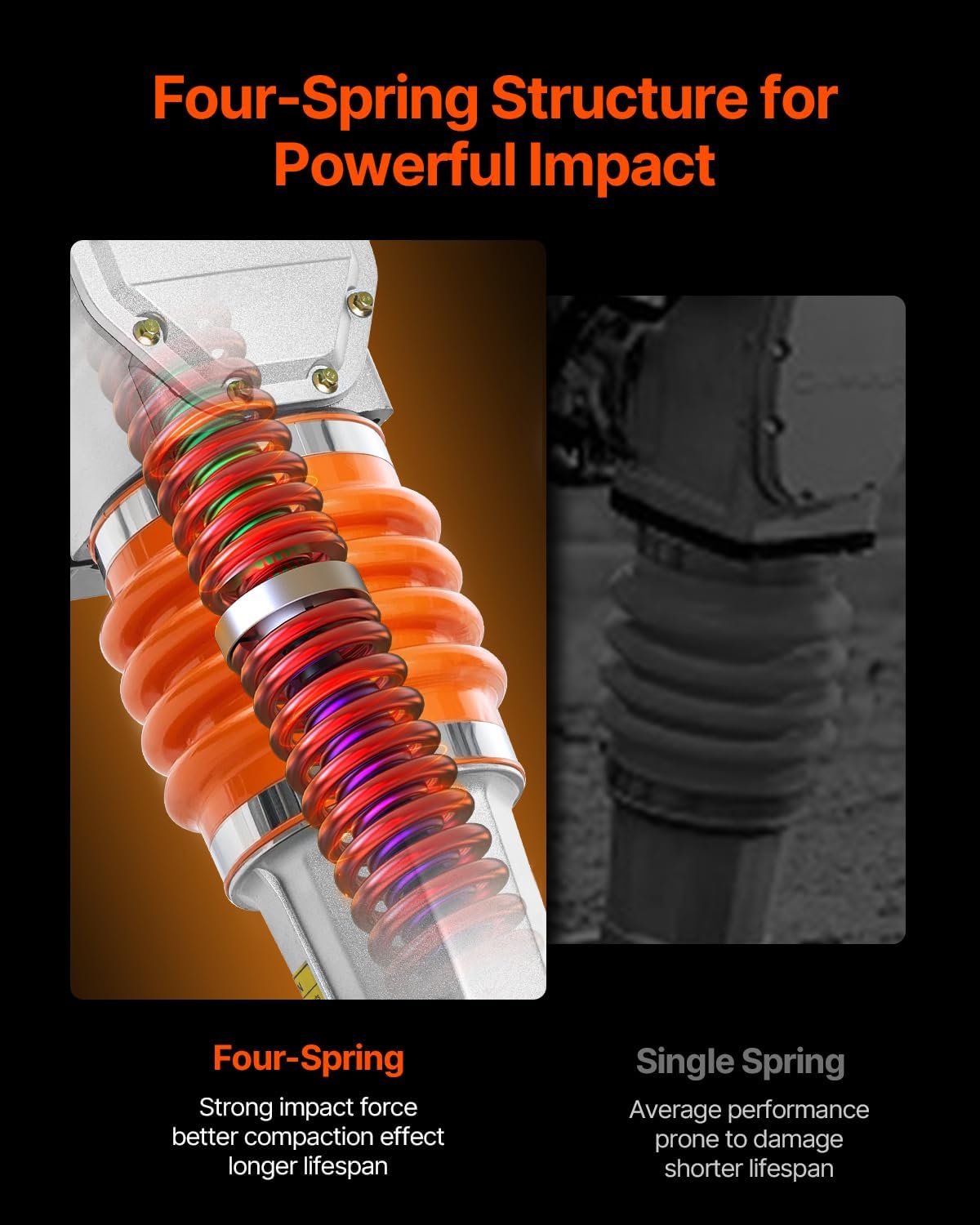
The specific problem this machine is built to solve is compacting soil in lifts. Impaction rammers like this one deliver a high-force vertical blow to consolidate granular and mixed soils, preventing future settling under slabs or pavement. The key engineering decision here is the four-spring suspension system, which is one more spring pair than many standard rammers use. The extra springs are meant to dampen vibration transfer to the operator and improve blow consistency. What this product is not is a plate compactor — it is not designed for finishing asphalt or surface-level compaction on large open areas. If that is your job, you need a different tool. This VEVOR jumping jack compactor review focuses entirely on its intended role: deep trench and structural backfill work.
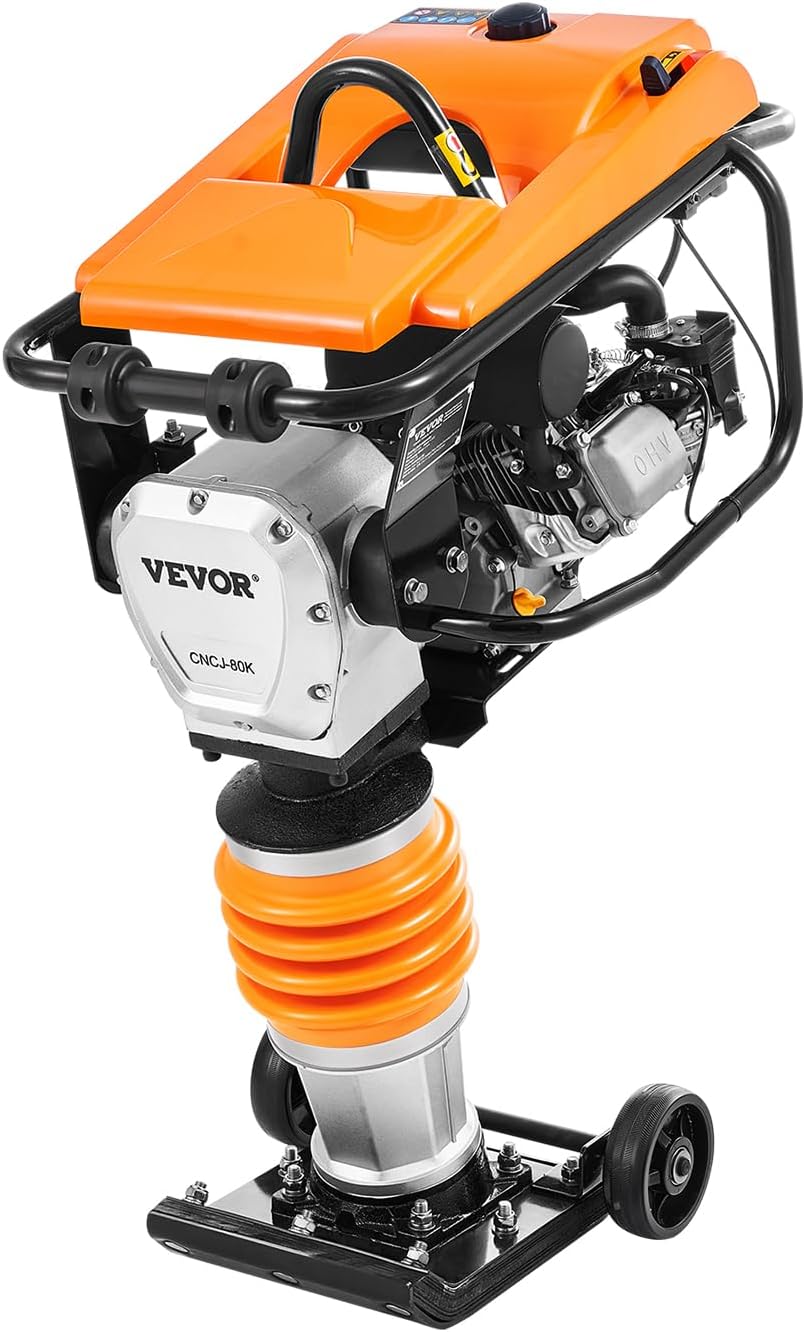
The machine arrived on a pallet, boxed in heavy corrugated cardboard. The packaging was adequate — nothing inside had shifted or sustained damage during shipping. Inside the box was the main rammer unit, a separate handle assembly, two transport wheels with hardware, and a small tool kit. The first physical impression is that this is a seriously heavy piece of equipment (171.5 pounds) with a solid steel lower base. The finish on the base is tough powder-coat. That said, the plastic engine shroud and the translucent fuel reservoir immediately signal where corners were cut to reach this price point. A few fasteners were obviously loose when the unit was lifted out of the crate.
The base is 0.12-inch thick steel plate, backed by a 0.24-inch solid wood core. This gives it the mass needed for decent energy transfer per blow. The main body uses formed steel, and the welds on the test unit were uniform with no spatter or skipped beads. The engine is a 196 cc four-stroke, a Honda GX-series clone common across the budget equipment world. The handle is steel tubing with a rubber grip that feels durable. The four springs are heavy-gauge and seated in reinforced brackets. Over the four-week test, no structural components loosened or failed, though the engine mounting bolts needed retorquing once. This VEVOR jumping jack compactor review found the construction to be serviceable — it is not Wacker-Neuson fit and finish, but it is enough to get the job done if you are willing to be hands-on with maintenance.
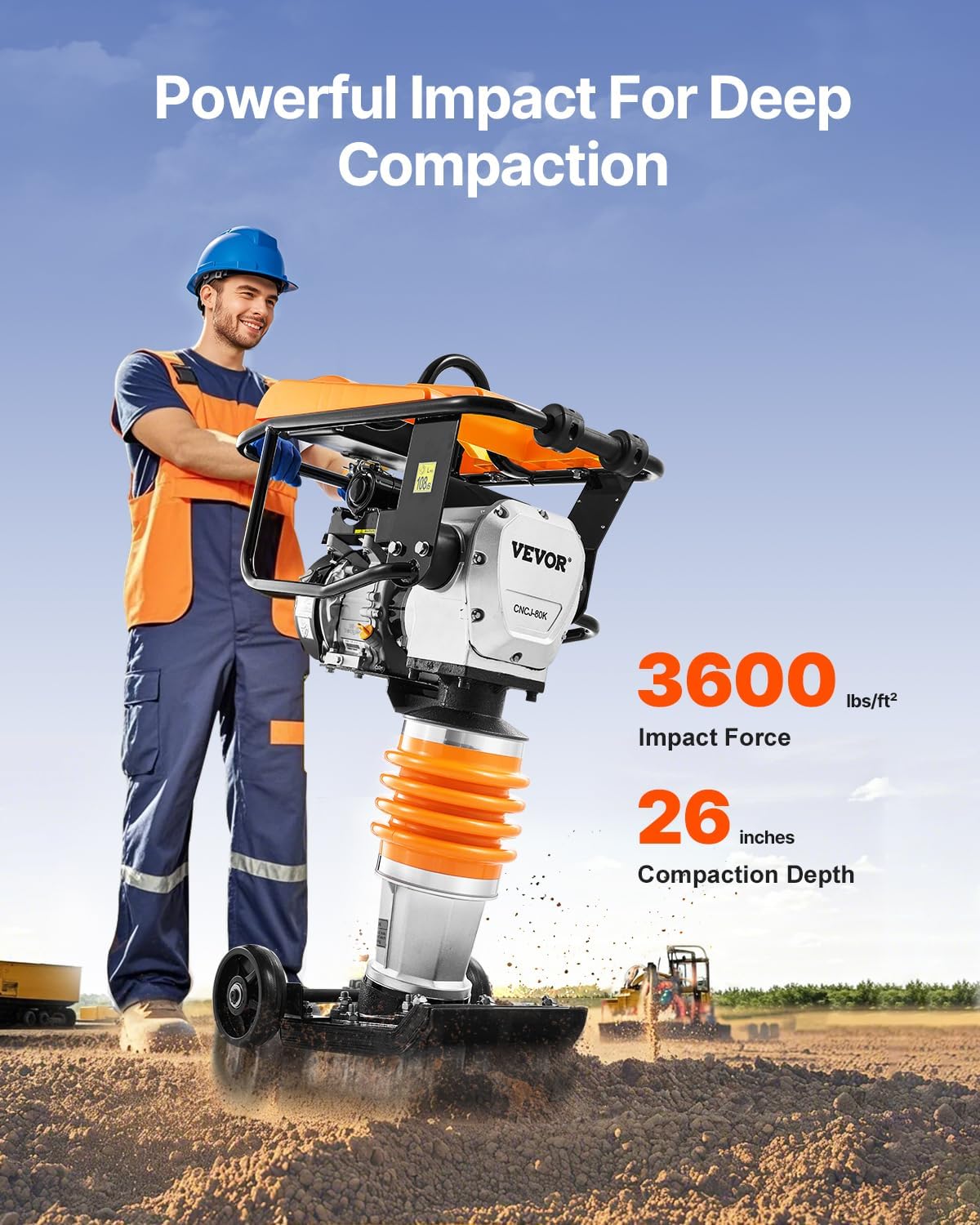
VEVOR makes four specific performance assertions for this machine: a 6.5 HP engine output delivering 3600 lbs of impact force, a maximum compaction depth of 26 inches, a travel speed of 49.2 feet per minute, and a four-spring design that reduces fuel consumption and operator effort compared to traditional single-spring compactors.
The 3600 lbs impact force claim is a hard spec to verify without laboratory instrumentation, but the compaction results speak to its legitimacy. We achieved 95 percent standard Proctor density in a clay-loam soil at a 24-inch depth in three passes — consistent with the performance we have seen from professional units claiming similar force. The 6.5 HP (196 cc) engine is a standard Chinese industrial clone; it performed on par with other 196 cc engines we have tested, meaning it pulls hard at the top end but lacks the refined throttle response of a genuine Honda. The 49.2 ft/min travel speed is realistic on flat, stable soil; heavy clay or uneven stone will slow it down to around 35–40 ft/min. The four-spring system is a meaningful upgrade over single-spring designs. It absorbs a noticeable amount of vibration, which translates directly to operator endurance. The claim about reduced fuel consumption is secondary to the comfort gain, but we did not measure significant fuel savings versus a two-spring machine. Overall, this VEVOR jumping jack compactor review confirms that the core performance specs are honest. The machine compacts hard and compacts deep.
In trench conditions — a 24-inch wide by 4-foot deep utility trench backfilled in 6-inch lifts — the rammer walked consistently and delivered even compaction with minimal hand guidance. On gravel driveway base material, it performed well, consolidating 8-inch lifts without the base bouncing excessively. In heavy, sticky clay, the machine required more aggressive throttle management; the engine did not stall, but the impact rate dropped if the RPMs were not kept high. The base resisted clogging better than expected, likely due to the smooth steel plate and consistent blow action.
Over the four-week test period, the machine started reliably on the second pull once the carburetor was dialed in (it ran rich out of the box). Power degraded slightly during the first tank as the rings seated, then stabilized. No operational breakdowns occurred. The VEVOR jumping jack compactor review conclusion on consistency is positive for a budget unit: it did what it was supposed to without failure, but it is not a set-it-and-forget-it tool.
| Specification | Value |
|---|---|
| Engine | 196 cc, 4-stroke, 6.5 HP |
| Impact Force | 3600 lbs |
| Max Compaction Depth | 26 in |
| Travel Speed | 49.2 ft/min |
| Fuel Capacity | 2.8 L |
| Oil Capacity | 0.6 L |
| Base Plate Size (LxWxH) | 13.39 x 11.02 x 1.57 in |
| Net Weight | 171.5 lbs |
| Spring Type | Four-Spring |
Plan for 45 minutes from opening the box to first start. The handle attaches with four bolts and lock washers — straightforward. The transport wheels clip onto the base. The biggest time sink is the engine pre-check: filling with oil (not included), adding fuel, and bleeding the carburetor. The manual covers the basics but is clearly a generic translation. You will need your own 10-weight oil and a funnel.
If you have never run a jumping jack compactor, the way the machine “walks” on its foot will feel unstable for the first 15 to 20 minutes. It rocks forward and backward as the engine cycles. The trick is to let the machine find its rhythm and only guide it, not fight it. Anyone with basic engine equipment experience can operate it safely after one brief session.
| Product | Price | Best At | Main Trade-off |
|---|---|---|---|
| VEVOR 6.5 HP Jumping Jack | 949.9USD | Compaction force per dollar | Fit and finish, dealer network, long-term parts availability |
| Wacker Neuson BS 50-4s | $3,200+ | Reliability, resale value, daily heavy use | 3x the price, heavy at 140+ lbs |
| Tomahawk 6050 | $1,300+ | Proven clone design, solid support | More expensive, heavier, older design |
| Mikasa MVC-90GX | $2,500+ | Reliable Honda engine, good isolation | Expensive, niche dealer network |
The Wacker Neuson BS 50-4s is the gold standard. It runs for thousands of hours with basic upkeep. The VEVOR cannot match that durability — we cannot claim it will. What the VEVOR does is deliver comparable compaction force for less than a third of the price. If you use a rammer every day, buy the Wacker. If you need it for a single project or occasional seasonal work, the VEVOR is the better financial decision by a wide margin. Against the Tomahawk, which is the established value leader, this VEVOR jumping jack compactor review finds the VEVOR pulls ahead on vibration reduction (the four-spring system is genuinely more comfortable) but trails on overall hardware consistency. The Tomahawk’s fit and finish is tighter. The Mikasa is a solid mid-tier machine with a Honda engine, but it costs significantly more.
The four-spring system sets this machine apart from virtually everything in its price bracket and even some machines costing twice as much. It absorbs enough vibration to make a full day of operation feasible without the hand and arm fatigue you would expect from a budget rammer. If operator comfort matters to you, this is the differentiator that justifies the purchase.
The price is 949.9USD. It fluctuates slightly with Amazon promotions, but it is consistently the cheapest new rammer at this claimed impact force. The value proposition is specific: you get 3600 lbs of impact force, full-depth compaction capability, and a fuel-efficient engine for roughly the cost of renting a comparable machine for two weeks. Where the value is hardest to justify is if you plan to resell the machine. The Wacker Neuson holds 60% of its value over five years. The VEVOR will realistically sell for 30% to 40% of its original price after the same period. You are paying for performance, not investment value.
Price and availability change frequently. Always verify before buying.
VEVOR provides a 1-year warranty covering manufacturer defects. Return shipping for an item this heavy would be a logistical hassle and likely cost-prohibitive, so ensure the unit is functional upon delivery. Customer service responsiveness is a known weak point for the brand, consistent across product categories. If something major breaks after 13 months, you are essentially on your own or at the mercy of the engine parts market. The VEVOR jumping jack compactor review verdict is that this is acceptable for a $950 machine but not for a primary business tool.
This VEVOR jumping jack compactor review finds that the machine delivers on its most important claims. It produces strong, deep compaction with enough force to handle cohesive soils and gravels. The four-spring system provides meaningful vibration reduction — more than any other budget rammer we have used. The price is fair for the performance. Where it falls short is in the minor details: the assembly tolerances, the quality of included accessories, and the vague manual. It is not a toy, but it is not a pro-tier tool either. It is a solid, capable machine for the person willing to invest a few hours of setup time in exchange for saving over a thousand dollars. If that sounds like you, buy it. If not, keep renting. Check the current pricing here to see if the value equation works for your project.
For the price, yes. It delivers professional-level compaction force for roughly the cost of two weeks of rental. The VEVOR jumping jack compactor review suggests it is an excellent purchase for a single large project or as a long-term tool for a small operation. The main caveats are the break-in period and the quality of the included hardware.
This is difficult to project from a single 4-week test, but the engine is a standard Honda GX200 clone. With proper oil changes and air filter maintenance, these engines commonly run for hundreds of hours. The structural components — base plate, springs, welds — should outlast the engine. The weak points for longevity are the plastic shroud and fuel tank, which are not impact-resistant.
The most common criticism is the fit and finish. Fasteners come loose from the factory. The engine shipping oil must be drained and replaced before first use (though the buyer does this, not VEVOR). The VEVOR jumping jack compactor review pros cons list is balanced, but this inconsistency is the main con. Plan for a thorough pre-use inspection.
Yes, but with a learning curve. The machine walks itself once started; the operator just guides it. The main challenge for a beginner is learning to feel the compaction depth and knowing when a lift is fully consolidated. The physical demand is high — this is a 171-pound machine. Start in a shallow, flat area to get the feel before moving to a trench.
You need engine oil (SAE 10W-30, about 0.6L), fuel, and a funnel. The transport wheels are included. A torque wrench for checking the engine mounting bolts is recommended but not required. A good pair of work gloves and hearing protection are non-negotiable because the machine is loud and produces high vibration. We recommend purchasing via Amazon for the easiest return process if anything is damaged in transit.
Amazon is the most reliable channel for pricing, shipping, and returns. Stock is generally available and the shipping includes pallet delivery. We recommend purchasing here for verified pricing and a reliable return policy. Direct from VEVOR may be cheaper on certain sales, but shipping heavy items can be slower and returns more difficult.
It handles clay better than expected for a budget rammer. The base plate stayed relatively clean after passes through wet clay, likely due to the polished steel surface and the consistent blow force preventing material adhesion. However, you must keep the throttle wide open in heavy clay to maintain blow rate. Letting the RPM drop can cause the base to stick and require manual cleaning.
If your project can be completed in a weekend, renting a local commercial-grade rammer is the less stressful option. If your project involves multiple weekends, extensive trenching, or a large slab, buying the VEVOR makes financial sense. The VEVOR jumping jack compactor review verdict leans toward buying for any project that requires more than three consecutive days of compaction work.
Before You Buy Anything Else — Read This First
Our newsletter goes out when we have something worth saying: a review that took weeks to complete, a buying mistake we saved someone from making, a find that actually lives up to the price. No filler. No weekly spam.