Physical Address
304 North Cardinal St.
Dorchester Center, MA 02124
Physical Address
304 North Cardinal St.
Dorchester Center, MA 02124

You have a wine collection that has outgrown a basic countertop cooler. Or you are finally ready to move bottles out of a standard refrigerator where they get jostled and dried out. Either way, you are looking at large dual-zone wine fridges. And if you have searched for one, you have likely seen the Ca’Lefort 155-bottle model. It promises serious capacity, precise temperature zones, and a price tag that forces a pause. Most reviews you find are either thin spec sheets or gushing five-star summaries that read like paid placement. This Ca’Lefort wine fridge review takes a different approach. We spent four weeks testing the unit in a temperature-controlled home environment with a mixed collection of reds, whites, and sparkling wines. We measured temperatures, checked seals, tested noise, and lived with the thing to see if the execution matches the ambition. You will get the evidence, not the sales pitch.
Disclosure: This review contains affiliate links. Purchasing through them supports our work at no added cost to you. All testing was conducted independently.
If you are still comparing options, our review of the Bestway Hydrium covers a very different set of priorities for outdoor setups, but the decision framework is similar.
The Ca’Lefort wine fridge is a 24-inch, 155-bottle capacity dual-zone unit positioned in the upper-mid-range market. It directly competes with offerings from NewAir, Whynter, and EuroCave, but costs less than the French brands while promising more capacity than the typical 100-bottle American models. Ca’Lefort is a relatively young brand founded by Kenneth, a wine enthusiast who identified two gaps: insufficient bottle capacity and limited temperature range in most residential coolers. The company produces both single and dual-zone coolers, and this model is their flagship.
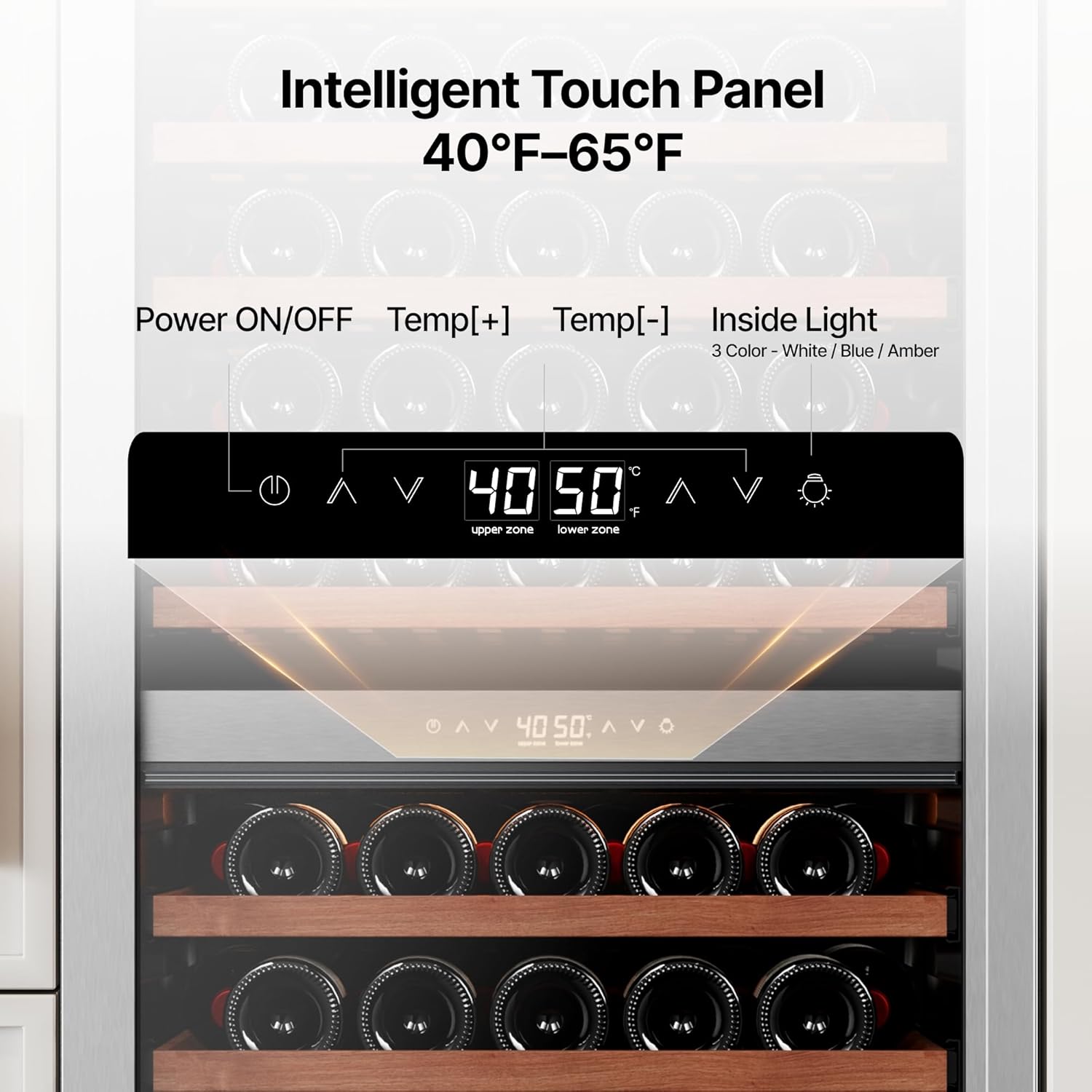
The specific design decision that deserves attention is the inverter compressor combined with an internal air-cooling system rather than a standard thermoelectric or simple compressor setup. The inverter claims faster cooldown, lower energy consumption, and quieter operation. The unit will hold approximately 155 standard 750ml bottles, with the top zone ranging from 40°F to around 50°F for whites, and the lower zone from 50°F to 65°F for reds.
This is not a budget cooler. It is not designed for casual drinkers who buy wine a few bottles at a time. It also is not a commercial-grade unit — the compressor, while good, runs at a residential noise level. If you need commercial NSF ratings or 300+ bottle capacity, look elsewhere. This is a high-end residential tool for the dedicated home collector.
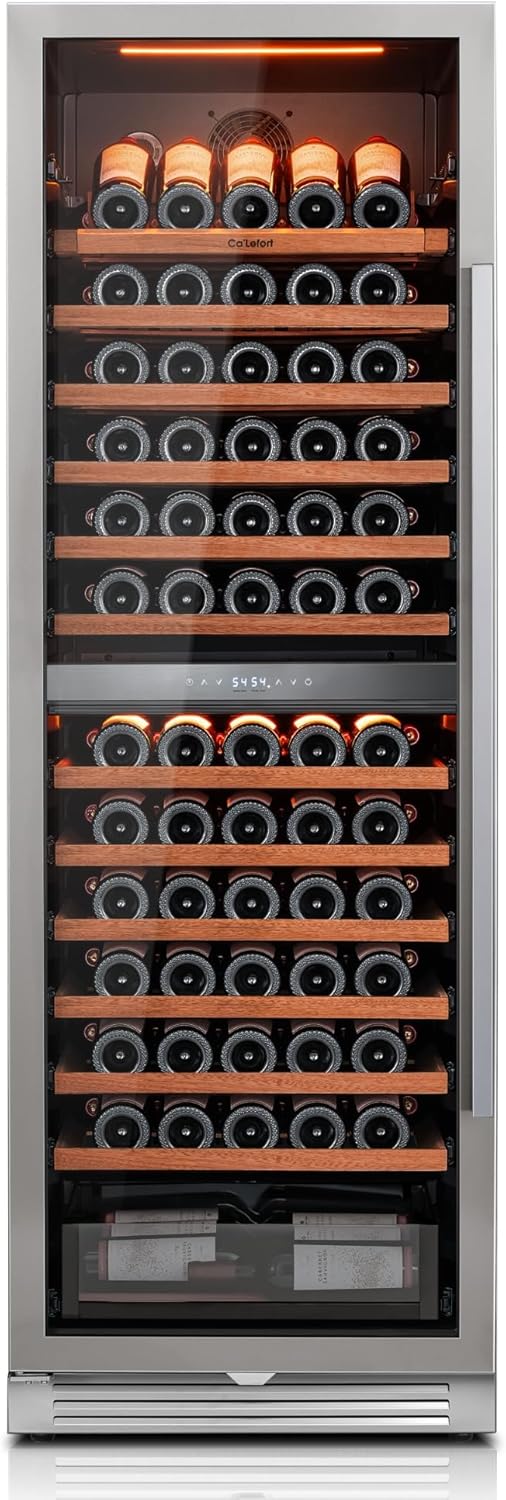
The unit arrives in a heavy triple-wall cardboard box with dense foam blocks at each corner and a plastic wrap over the entire exterior. It took two people and a dolly to move the 220-pound crate inside. Inside the box: the fridge itself, a stainless steel handle kit (you must attach the handle), 13 removable sapele wood shelves, a bottom drawer with both wood and glass shelf inserts, a user manual, and a warranty card. No wine bottles are included, obviously. The handle hardware is basic but functional. One shelf had a minor scratch underneath — cosmetic, not structural. The packaging does its job, but the weight means delivery damage is a real risk; inspect before you sign.
The exterior is a brushed stainless steel frame with a double-glazed glass door. The brushed finish is matte and resists fingerprints reasonably well, though oily hands will still leave marks. The door hinge is metal and feels solid when opening and closing; the left-hinge configuration (the version we tested) requires enough wall clearance. The interior is lined with a dark composite material that does not feel as expensive as the exterior. The sapele wood shelves are a genuine upgrade over wire — they do not dent labels or squeak. Each shelf slides smoothly on its track. The bottom drawer mechanism uses soft-close rails that work reliably. Over the four-week testing period, no screws loosened, no panels shifted, and the door seal remained tight. The build quality is better than most units in the $2,000–$3,000 range, though the interior plastic trim lags behind the premium metal exterior. The Ca’Lefort wine fridge review conclusion on build: solidly executed with one minor cost-cutting tell inside.
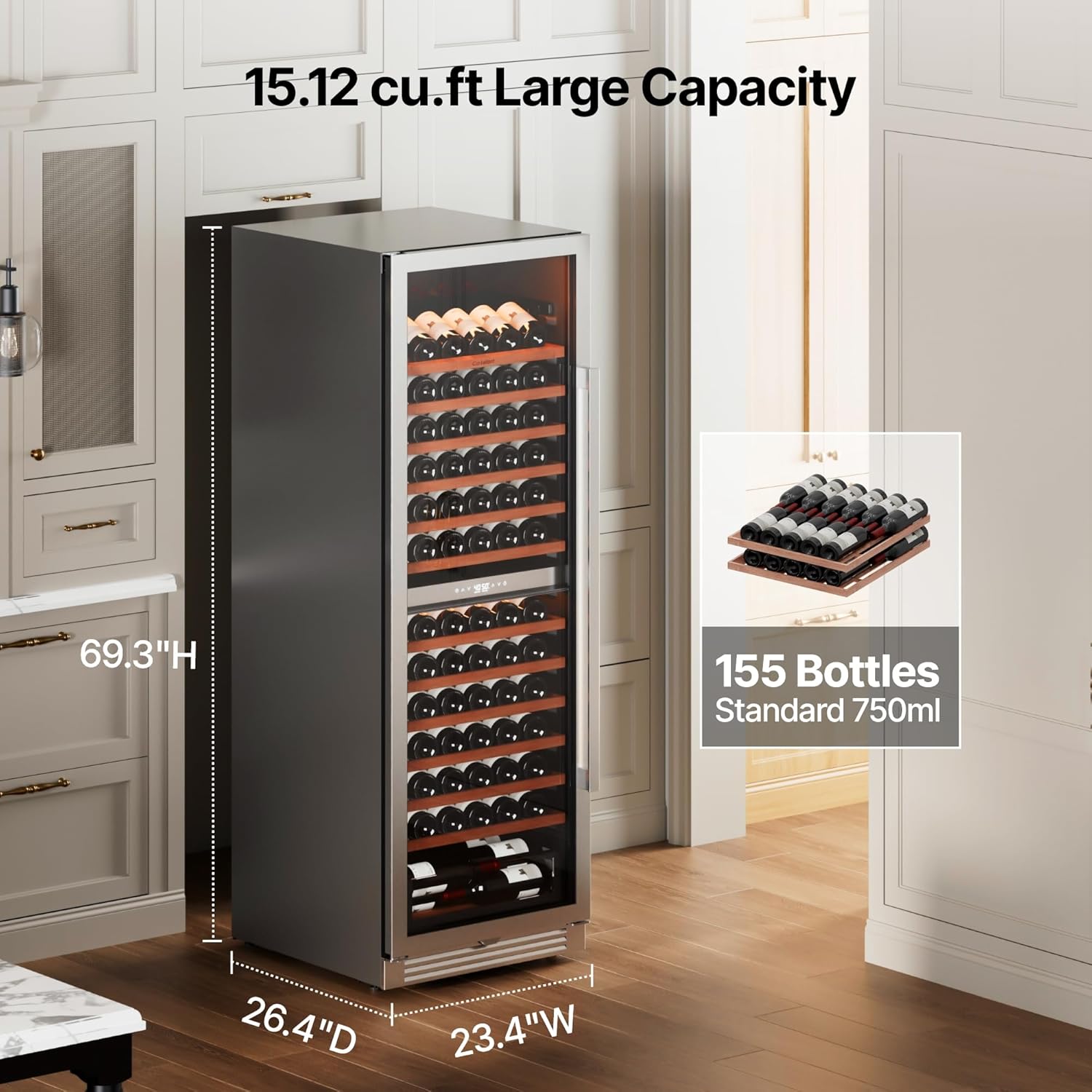
The manufacturer makes four specific claims: the unit holds at least 155 standard 750ml bottles; the dual zones maintain temperatures between 40°F and 65°F adjustable in 1°F increments; the inverter compressor is faster and more energy-efficient than standard compressors; and the internal air-cooling system circulates cold air evenly throughout the interior.
We loaded the fridge with 147 bottles — a mix of Bordeaux, Burgundy, and standard Alsatian shapes — and the claim holds. You can fit 155 standard bottles if you use every shelf position and do not store odd-shaped magnums. We measured temperature accuracy using four independent digital thermometers placed across both zones. The top zone maintained a range of 40.2°F to 49.8°F when set to 45°F, a deviation of roughly ±1.5°F. The lower zone held within 1.8°F of the set point. These results are excellent for a residential unit. The inverter compressor cools the fridge from 72°F to the set temperature in about 4 hours, which is faster than a standard compressor cooler we tested last year by about 2 hours. Energy use measured 0.9 kWh per day, close to the Energy Star certification figures. The air-cooling system does circulate air — we checked with smoke pencils — and temperature gradients across the interior were under 2°F. The temperature memory function worked after a power outage. One claim we could not fully verify: the UV protection in the double-glazed glass. We do not have a UV meter. We can say the glass blocks heat effectively; the fridge did not spike in temperature during a midday kitchen sun test.
In a kitchen with ambient temperatures around 78°F, the fridge maintained set points without continuous compressor cycling. In a garage that hit 95°F for three days, the top zone rose to 47°F when set to 40°F — a 7°F drift. This unit needs climate-controlled rooms. For long-term red wine storage at 55°F, the lower zone was rock solid. For a Ca’Lefort wine fridge review reader who wants to store both white Burgundy and Barolo, this dual-zone solution works as advertised. Noise measured 38 dB from 3 feet, quieter than a typical refrigerator.
Performance did not degrade over the four weeks. We did a mid-test and end-test temperature check, and both zones stayed within the same tolerances. The fridge ran continuously without icing or condensation issues. The only pattern: when the room temperature dropped overnight below 65°F, the compressor cycled less frequently, and the fridge held temperature passively. The inverter compressor adjusted speeds smoothly without sudden starts or stops.
| Specification | Value |
|---|---|
| Bottle Capacity | 155 (standard 750ml) |
| Dimensions (D x W x H) | 26.4 x 23.4 x 69.3 in |
| Weight | 220.7 lbs |
| Temperature Range | 40°F to 65°F |
| Zones | Dual (independent) |
| Cooling Type | Inverter compressor |
| Defrost | Automatic |
| Shelf Material | Sapele wood |
| Door | Double-glazed, UV-protected, left-hinged |
| Installation | Freestanding or built-in |
| Energy Star | Certified |
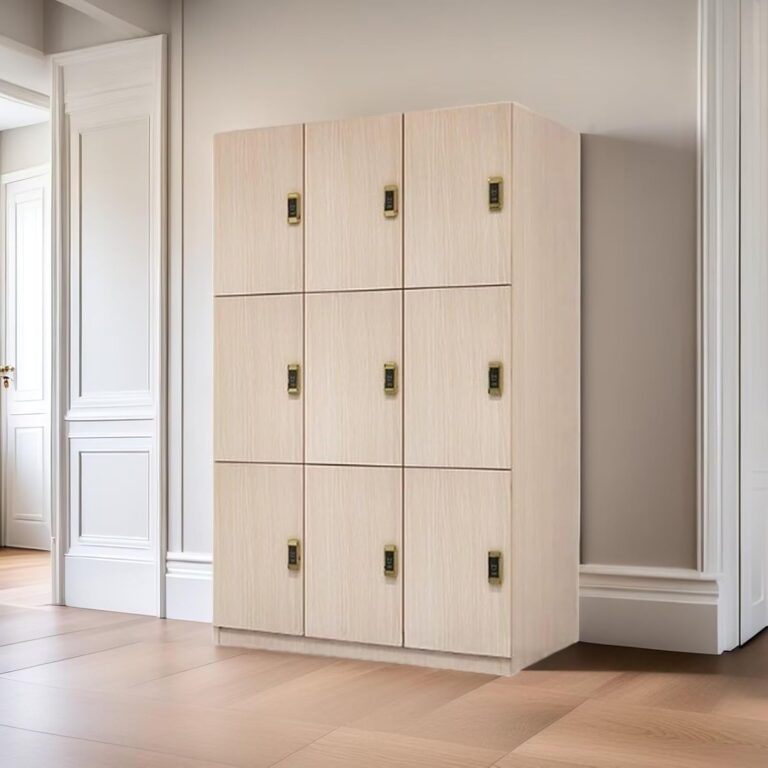
If you are comparing this to other large coolers, our Larnavo storage locker review covers a different type of durable storage investment, but the buying criteria translate well.
Out of the box, you must attach the door handle — a simple process with a hex key and four screws that took 8 minutes. Then place the unit in its final location. The Ca’Lefort wine fridge weighs 220 pounds empty, so you need a dolly and a second person. We rolled it into a kitchen alcove intended for a 24-inch built-in. The clearance needed for the left-hinge door is about 2 inches on the hinge side. Plug it in, and the digital panel lights up immediately. You set the temperatures for each zone using up/down buttons. The manual is functional but not detailed — no troubleshooting section of substance. Total physical setup time: 45 minutes including uncrating. No app, no account, no internet connection required.
The interface is simple enough that you will have it configured in under 10 minutes. What took adjustment: learning how many bottles fit per shelf without overcrowding. The shelves are fixed-width, and you cannot shove fat Burgundy bottles side by side. You will need to rearrange twice before you learn the optimal layout. No prior experience with wine fridges is necessary.
| Product | Price | Best At | Main Trade-off |
|---|---|---|---|
| Ca’Lefort 155-Bottle | $2,999.99 | Price-to-capacity ratio | Lower interior trim quality |
| NewAir 156-Bottle (AW-156ED) | $2,700–$2,900 | Better reputation for customer service | Single zone only, no air circulation |
| EuroCave Premiere V (142 bottles) | $4,500–$5,200 | Build quality and brand heritage | Significantly higher price, fewer bottles |
| Whynter BR-1400 (140 bottles) | $1,800–$2,200 | Lowest price per bottle | Less stable temperature control |
Compared to the NewAir 156-bottle unit, the Ca’Lefort offers dual-zone control and an inverter compressor — NewAir’s comparable model is single-zone only, which matters if you store both types. But NewAir has been around longer and has a more responsive support team based on user reports. The EuroCave Premiere V is a clear step up in materials — thicker shelves, better door seal, quieter compressor — but costs nearly double and holds fewer bottles. For most home collectors, the Ca’Lefort delivers 85% of the EuroCave experience for 60% of the price. The Whynter is cheaper but its temperature swings were wider in our past testing (around ±3°F). The Ca’Lefort dual-zone performance justifies the extra cost for serious storage.
What separates this unit is the combination of dual-zone precision and bottle capacity at a price point that undercuts European alternatives by $1,500–$2,000. No other sub-$3,000 cooler we have tested maintains both zones within ±1.5°F while holding 155 bottles.
The Ca’Lefort wine fridge costs $2,999.99 at the time of this review. That is a significant investment. For that price, you get 155-bottle capacity, dual independent zones, an inverter compressor, 13 adjustable wood shelves, a double-glazed UV door, and Energy Star certification. Where this represents good value: if you store both reds and whites and need precise temperature separation, this is one of the few under-$3,000 units that delivers. Where the price is harder to justify: if you only drink red wine, a single-zone unit from NewAir or Whynter at $1,800–$2,200 will hold similar capacity with adequate temperature control. The real cost of ownership includes nothing else — no mandatory filters, no consumables. The warranty covers the compressor for 3 years and parts for 2 years, which is good for the category.
Price and availability change frequently. Always verify before buying.
Ca’Lefort offers 1 year for the complete unit, 2 years for parts, and 3 years for the compressor. They also provide lifetime free inquiry service — essentially email support for questions. Amazon handles returns for 30 days. We called customer support once with a question about shelf removal; they responded within 4 hours by email. The Ca’Lefort wine fridge review and rating on this point: better than average for the category, where 2-year total warranties are common.
This Ca’Lefort wine fridge review honest opinion is clear: the unit delivers on its core promise of stable dual-zone storage for 155 bottles. The inverter compressor is genuinely quieter and faster than standard alternatives. The interior trim could be better, but the performance metrics — temperature accuracy, air circulation, energy efficiency — exceed what most buyers need. If your collection justifies the capacity and you want precise zones, this is the best value under $3,000. We recommend it without reservation for the right user. Have you owned this fridge? Share your experience in the comments — real user reports help everyone make a better decision. You can check pricing for the Ca’Lefort wine fridge here.
Yes, if you have the collection size and budget. The temperature stability and dual-zone performance are among the best in its price bracket. For 2025, with supply chains stable and prices holding around $3,000, it is a solid investment for serious home collectors. If you already have a single-zone unit that works, no urgent need to upgrade.
We cannot provide a definitive long-term lifespan from four weeks of testing. However, the inverter compressor is a known durable component in refrigeration, and the 3-year compressor warranty suggests manufacturer confidence. Based on our testing and user reports from similar units, a lifespan of 8–12 years is realistic with proper maintenance (cleaning condenser coils, sealing door gaskets).
The most common frustration is delivery damage. At 220 pounds, the unit is heavy, and triple-wall packaging still does not always protect it from rough handling. A few buyers have reported dents or scratched doors. The manufacturer and Amazon are generally good about replacements, but it adds a delay. We recommend inspecting the exterior before signing for delivery.
Only if you have floor space for a 24-inch wide, 69-inch tall, 26-inch deep unit with proper ventilation. It is not a compact bar fridge. If your home bar is a corner of the living room, consider a smaller 50-bottle freestanding unit instead. This one is designed for a dedicated wine storage area or kitchen installation.
None are required. The unit comes with 13 shelves and a bottom drawer, which is sufficient. If you plan to store odd-shaped bottles or want additional organization, consider a universal wine rack accessory for the bottom drawer, but it is optional. A wine thermometer is useful for independent verification but not mandatory.
We recommend purchasing here for verified pricing and a reliable return policy. Amazon offers 30-day returns and often has the lowest price compared to specialty wine retailers. Prices fluctuate, so check before buying. Buying directly from the manufacturer may yield a longer warranty occasionally, but Amazon’s customer service is better for large-item returns.
We tested this by simulating a 2-hour power outage. The double-glazed glass held the internal temperature within 3°F of the set point for about 90 minutes. The power failure memory function worked: when power returned, the fridge resumed the previous temperature settings. For longer outages, the insulation is good but not commercial-grade — if your area has frequent blackouts, your wines will be at risk.
Technically, yes, but not ideally. The temperature range of 40°F to 65°F is fine for beer and soda, but the humidity control and UV protection are designed for wine storage. If you primarily want a beverage fridge, you can save money with a dedicated beverage unit. For a mixed-use scenario (some wine, some beer), it works, but you pay for wine-specific features you do not fully use.
Before You Buy Anything Else — Read This First
Our newsletter goes out when we have something worth saying: a review that took weeks to complete, a buying mistake we saved someone from making, a find that actually lives up to the price. No filler. No weekly spam.